Ahoi Ashtami 2026: Date, Puja Vidhi, Vrat Katha and Significance
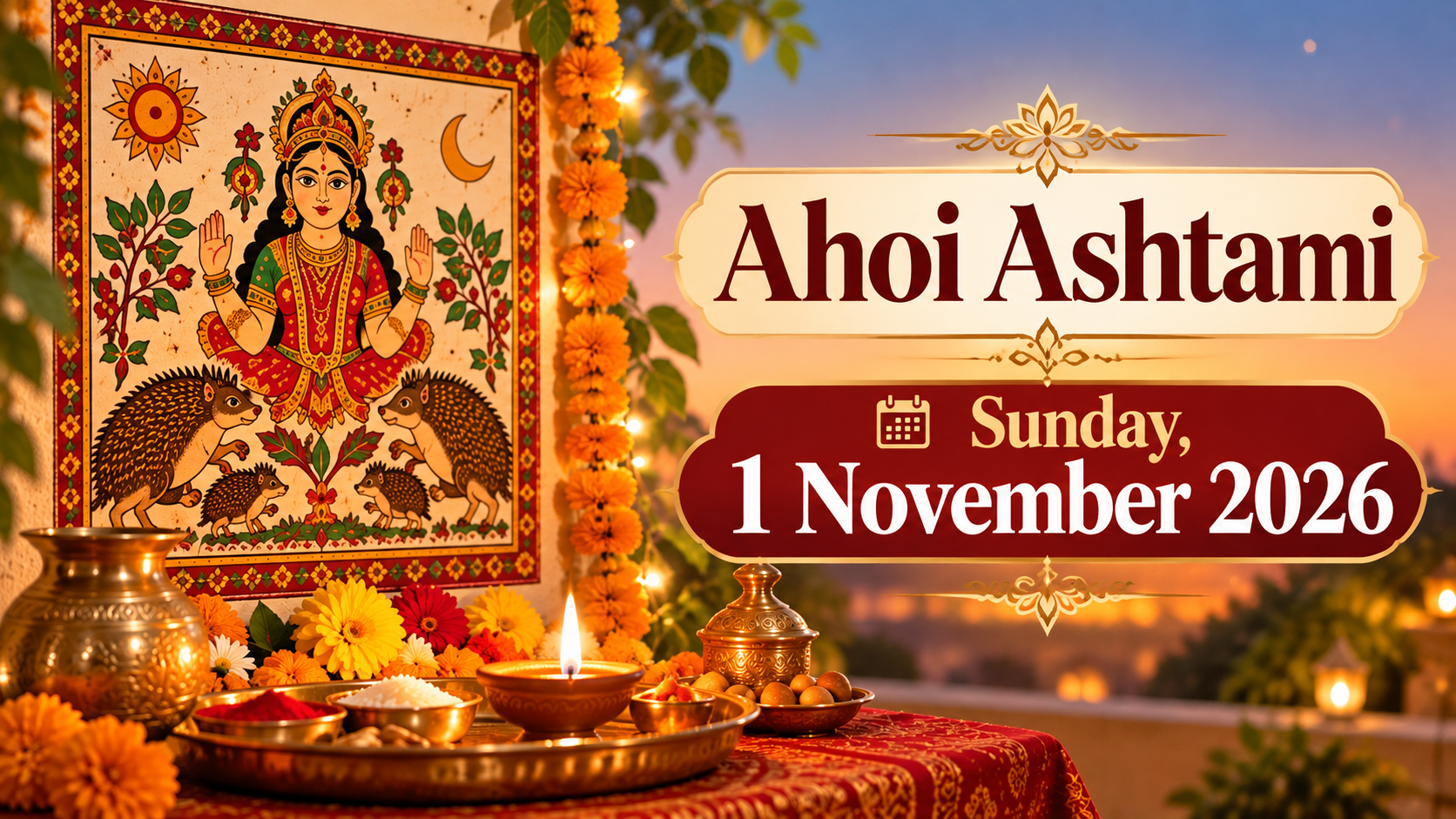
Date: Sunday, 1 November 2026
By Astrologer Manisha Koushik
Ahoi Ashtami is observed by mothers who pray for the health, happiness and well-being of their children. Celebrated mainly in North India, the festival falls on the eighth day of Krishna Paksha in the Kartik month, approximately eight days before Diwali.
Traditionally, mothers observe a day-long fast and worship Ahoi Mata in the evening. In many households, the fast is completed after sighting the stars, while some families follow the custom of waiting for the moon.
Although the festival was traditionally associated with prayers for sons, many mothers today observe Ahoi Ashtami for the well-being of all their children.
Why Is Ahoi Ashtami Celebrated?
Ahoi Ashtami holds a special place in the festive traditions of North Indian families, particularly in Punjab, Haryana, Delhi, Rajasthan and Uttar Pradesh.
The worship of Ahoi Mata is associated with the protection and welfare of children. The occasion also brings generations of women together, as mothers and grandmothers pass down the vrat katha, puja customs and family traditions.
One interesting aspect of Ahoi Ashtami is that the method of worship may differ from one household to another. Some families prepare a traditional drawing of Ahoi Mata on the wall, while others use a framed picture or a printed image. The offerings and the method of completing the fast may also vary.
These differences are part of the regional traditions associated with the festival.
Ahoi Ashtami Puja Vidhi
On Ahoi Ashtami, mothers traditionally begin their fast in the morning and make preparations for the evening puja.
An image of Ahoi Mata is placed in the worship area. In many homes, the traditional image includes Syahu (a porcupine-like animal) and her young ones, which are associated with the Ahoi Ashtami story.
The puja thali generally includes roli, rice, flowers, a diya, water and offerings prepared according to family customs.
During the evening worship, women offer prayers to Ahoi Mata and listen to or recite the Ahoi Ashtami Vrat Katha. Water is offered as part of the traditional worship, and prayers are made for the well-being of children.
In many families, the fast is completed after the stars become visible. However, some households observe the tradition of waiting for moonrise.
There is no need to become confused when two families follow slightly different methods. The established customs of one's family and region can be followed.
-
अहोई अष्टमी के दिन सूर्य उदय से पूर्व उठे व् स्नान अदि कर खुद को शुद्ध कर लें|
-
अब घर में पूजा के लिए बैठे और व्रत का संकल्प करें|
-
माँ पार्वती व् शिव जी की उनके पुत्र गणेश व् कार्तिकेय सहित पूजा उपासना करें|
-
पहले समय में औरतें गेरू से अहोई माता और उसके सात पुत्र बनती थी| परन्तु अब यही चित्र आपको बाज़ारों में रंग बिरंगे चित्र के रूप में मिल जाते हैं|
-
अहोई माता के चित्र के आगे जल का कलश रखें|
-
उसके ऊपर करवा रखें जो चावल से भरा हो |
-
अब कुमकुम से दोनों कलश व् चौकी पर स्वस्तिक बनाएं|
-
जल के कलश के गले में स्याहु माता की माला पहनाएं|
-
माला को भी तिलक लगाएं|
-
अब हाथ में चावल के दाने लेकर कथा कहें व् सुने|
-
अब ये चावल साड़ी के पल्लू में बाँध लें|
-
अब यह जल रात को तारे देख उन्हें अर्पित करे| इसी जल में चावल के दाने, जो पल्लू में बंधे थे डाल लें|
-
अब पक्का खाना ( पूरी, हलवा, सब्ज़ी, मिठाई फल, वस्त्र, पैसे )आदि से बायना निकालें और घर की बड़ी स्त्री के पैर छू कर उन्हें दे|
Ahoi Ashtami Vrat Katha
According to the traditional story, a woman was digging soil in the forest when she accidentally injured a young animal. The incident brought sorrow into her life, and she later sought forgiveness through sincere prayers and worship.
The story is associated with Ahoi Mata and is narrated during the evening puja.
Different versions of the vrat katha are followed across regions, but the central message remains connected with compassion, repentance and the welfare of children.
The story also reminds us to be mindful of our actions and to treat other living beings with kindness.
Is It Necessary to Observe a Strict Fast?
Fasting is an important part of Ahoi Ashtami for many families, but it is equally important to consider one's health.
Women who are pregnant, breastfeeding, taking regular medication or dealing with a medical condition should not ignore their physical needs in order to follow a strict fast. Medical advice should take priority where necessary.
The purpose of observing a religious tradition should not be lost in the pressure to follow every ritual exactly as someone else does.
Ahoi Ashtami and Changing Family Traditions
Earlier, Ahoi Ashtami was commonly described as a vrat observed for sons. However, in many families today, mothers pray for their daughters and sons alike.
This is a welcome reflection of changing family practices while retaining the festival's central sentiment: a parent's concern for the well-being of their children.
The occasion is also a reminder that caring for children extends beyond a single day of fasting and worship. Their emotional well-being, education, confidence and sense of security deserve attention throughout the year.
Ahoi Ashtami 2026: A Final Thought
Festivals are meaningful not only because of the rituals we perform, but also because of the traditions and values we carry forward.
This Ahoi Ashtami, observe the customs that hold significance in your family, offer your prayers with sincerity and spend some meaningful time with your children.
Wishing you and your family a peaceful and blessed Ahoi Ashtami.
Astrologer Manisha Koushik
Disclaimer: The information presented on www.askmanisha.com regarding Festivals, Kathas, Kawach, Aarti, Chalisa, Mantras and more has been gathered through internet sources for general purposes only. We do not assert any ownership rights over them and we do not vouch any responsibility for the accuracy of internet-sourced timelines and data, including names, spellings, and contents or obligations, if any.