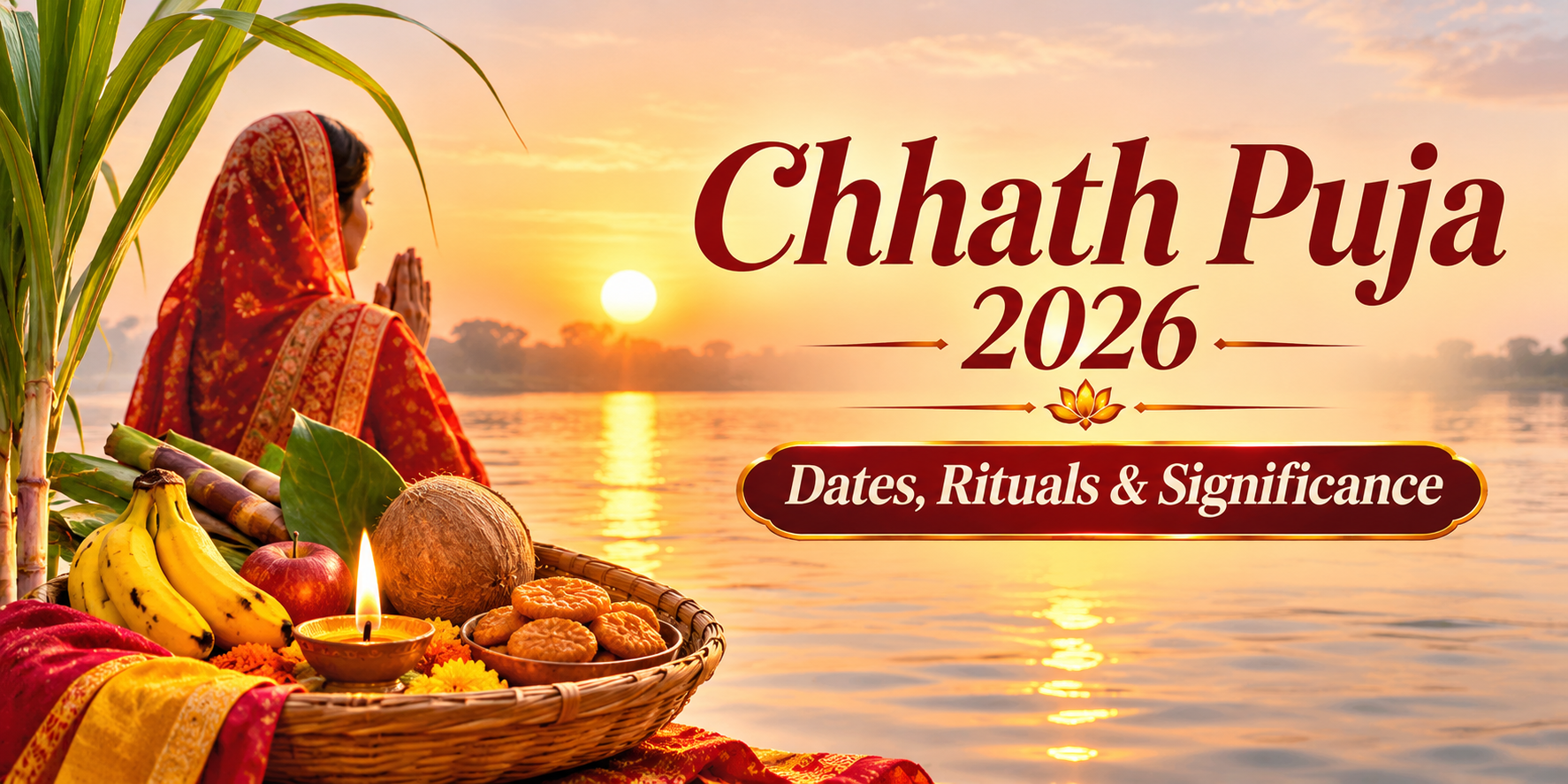
Chhath Puja 2026: Dates, Four-Day Rituals & Significance | छठ पूजा 2026: तिथि, पूजा विधि और महत्व
By Astrologer Manisha Koushik
Chhath Puja is one of the most deeply respected Hindu festivals, dedicated to Surya Dev and Chhathi Maiya. Celebrated with devotion, discipline and gratitude, this four-day festival holds a special place in the cultural and spiritual traditions of Bihar, Jharkhand, eastern Uttar Pradesh and parts of Nepal.
What makes Chhath Puja particularly meaningful is its distinctive tradition of offering Arghya to both the setting and rising Sun. While most celebrations focus on new beginnings and the rising Sun, Chhath Puja also honours the setting Sun, reflecting a beautiful tradition of gratitude and reverence.
The festival brings families and communities together through prayers, fasting, traditional offerings and rituals that have been passed down through generations.
Chhath Puja 2026: Important Dates and Four-Day Rituals
Important Dates:
- 13 November: Nahay Khay
- 14 November: Kharna
- 15 November: Sandhya Arghya
- 16 November: Usha Arghya
Chhath Puja is observed over four days, each carrying its own traditional practices and significance.
Day 1 – Nahay Khay (नहाय-खाय)
The celebrations begin with Nahay Khay. Devotees traditionally bathe, clean their surroundings and prepare simple vegetarian food according to their family customs.
This day marks the beginning of the preparations and the observance of purity and discipline.
Day 2 – Kharna (खरना)
Kharna is observed on the second day. Devotees traditionally fast during the day and prepare offerings such as kheer and roti, according to regional customs.
After evening worship, the fast is broken with prasad. Those observing the traditional strict vrat then begin a period of fasting that continues until the concluding morning rituals.
Day 3 – Sandhya Arghya (संध्या अर्घ्य)
The third day is one of the most significant occasions of Chhath Puja.
Devotees gather near rivers, ponds or other suitable water bodies to offer Arghya to the setting Sun.
Traditional offerings may include fruits, sugarcane, thekua and other items arranged in bamboo baskets.
The sight of families standing together in prayer as the Sun sets is among the most recognisable and meaningful traditions of Chhath Puja.
Day 4 – Usha Arghya (उषा अर्घ्य)
The festival concludes with prayers and Arghya offered to the rising Sun.
Devotees gather before sunrise and perform the concluding rituals as the first sunlight appears.
After the morning worship, those observing the fast traditionally complete their vrat and distribute prasad among family members and devotees.
छठ पूजा का धार्मिक महत्व
छठ पूजा सूर्य देव और छठी मैया की आराधना का पावन पर्व है। यह त्योहार हमें प्रकृति के प्रति आभार व्यक्त करना, अनुशासन बनाए रखना और परिवार की खुशहाली के लिए प्रार्थना करना सिखाता है।
इस पर्व की सबसे विशेष परंपरा है डूबते और उगते, दोनों सूर्य को अर्घ्य देना।
छठ पूजा में व्रत, स्वच्छता, सादगी और श्रद्धा का विशेष महत्व माना जाता है। परिवार और समाज के लोग मिलकर इस पर्व को मनाते हैं, जिससे आपसी सहयोग और रिश्तों की भावना भी मजबूत होती है।
Who Are Surya Dev and Chhathi Maiya?
Surya Dev, the Sun God, is revered in Hindu traditions as a source of light, energy and life.
The Sun plays an essential role in sustaining life on Earth, making its worship an expression of gratitude towards nature.
Chhathi Maiya is worshipped as a protective and nurturing divine mother. Devotees traditionally seek her blessings for the health, happiness and well-being of their families, particularly children.
Regional traditions and devotional narratives describe Chhathi Maiya in different ways. These beliefs form an important part of the festival's cultural and spiritual heritage.
Why Do We Offer Arghya to Both the Setting and Rising Sun?
One of the most thoughtful aspects of Chhath Puja is the worship of both the setting and rising Sun.
The rising Sun is commonly associated with hope, renewal and new beginnings.
The setting Sun, on the other hand, can be understood as a reminder to express gratitude for what has already been received.
Together, these rituals offer a meaningful spiritual reflection: gratitude should not be limited to moments of success or beginnings.
The setting Sun is worthy of reverence just as the rising Sun is.
This is a symbolic interpretation of the tradition rather than the only religious explanation for the ritual. Different families and communities may understand its significance through their own inherited beliefs.
The Importance of Purity and Discipline During Chhath Puja
Cleanliness, simplicity and discipline are central to Chhath Puja traditions.
Families take particular care in preparing the offerings and maintaining cleanliness in the Puja area.
Many devotees observe demanding fasting practices, including the traditional Nirjala Vrat, during which food and water are avoided for an extended period.
Such practices hold deep religious significance for those who follow them.
However, prolonged fasting without water can carry serious health risks. Anyone who is pregnant, elderly, unwell or taking medication should seek appropriate medical advice before considering a strict fast. Religious devotion should never require ignoring a medical emergency.
Traditional Chhath Puja Offerings
The offerings prepared for Chhath Puja are known for their simplicity and connection with traditional household practices.
Common offerings include:
- Thekua: A traditional preparation made with wheat flour and jaggery or sugar.
- Fruits: Such as bananas, coconuts and seasonal fruits.
- Sugarcane: Commonly used in festival preparations and offerings.
- Bamboo baskets: Traditionally used to arrange and carry Puja offerings.
- Diyas and flowers: Used according to family and regional customs.
The exact offerings may differ from one household to another.
The emphasis remains on cleanliness, devotion and following one's family traditions rather than elaborate or expensive arrangements.
Chhath Puja and the Importance of Family Traditions
Chhath Puja is more than an individual observance.
Family members often participate in preparing prasad, cleaning the home, arranging offerings and assisting those observing the vrat.
These shared responsibilities help preserve traditions across generations.
For families living away from their hometowns, the festival can also become an emotional connection with their roots.
The familiar preparations, traditional songs and collective prayers often bring back memories of childhood and family gatherings.
Celebrating Chhath Puja Away From Home
Many families now observe Chhath Puja in cities and countries far from their ancestral homes.
Where traditional riverbanks or community ghats are unavailable, some families make alternative arrangements that are safe, permitted and appropriate to their surroundings.
The central intention remains the same: offering prayers with devotion while respecting local conditions and community guidelines.
Devotees should avoid unsafe water bodies, overcrowded locations and arrangements that could harm the environment.
Frequently Asked Questions About Chhath Puja 2026
What is Chhath Puja?
Chhath Puja is a four-day Hindu festival dedicated to the worship of Surya Dev and Chhathi Maiya. It is traditionally associated with prayers for health, happiness and family well-being.
How many days is Chhath Puja celebrated?
Chhath Puja is traditionally observed over four days: Nahay Khay, Kharna, Sandhya Arghya and Usha Arghya.
Why is the setting Sun worshipped during Chhath Puja?
Offering Arghya to the setting Sun is a central tradition of Chhath Puja. It is often interpreted as an expression of gratitude, while its religious meaning is also understood through regional customs and devotional beliefs.
Who is Chhathi Maiya?
Chhathi Maiya is a revered maternal deity associated with protection, nurturing and the well-being of children and families.
What is the difference between Sandhya Arghya and Usha Arghya?
Sandhya Arghya is offered to the setting Sun in the evening, while Usha Arghya is offered to the rising Sun the following morning.
Is Nirjala Vrat compulsory for everyone?
Strict fasting is an important part of traditional Chhath observance, but individual circumstances and health considerations matter. People with medical concerns should seek professional guidance rather than undertake prolonged fasting without water.
Can Chhath Puja be celebrated outside Bihar?
Yes. Chhath Puja is observed by families and communities across India and internationally, often following their regional and household traditions.
A Thought for Chhath Puja 2026
Chhath Puja carries a message that remains meaningful even beyond the festival.
The Sun rises and sets every day, yet both moments are honoured through prayer.
Perhaps this is one of the most beautiful reflections the festival offers: appreciate beginnings, but do not forget to be grateful for everything that has brought you this far.
May this Chhath Puja bring peace, good health, harmony and happiness to every home.
छठ पूजा की हार्दिक शुभकामनाएँ।
Astrologer Manisha Koushik