Karwa Chauth 2026 Date: Thursday, 29 October 2026
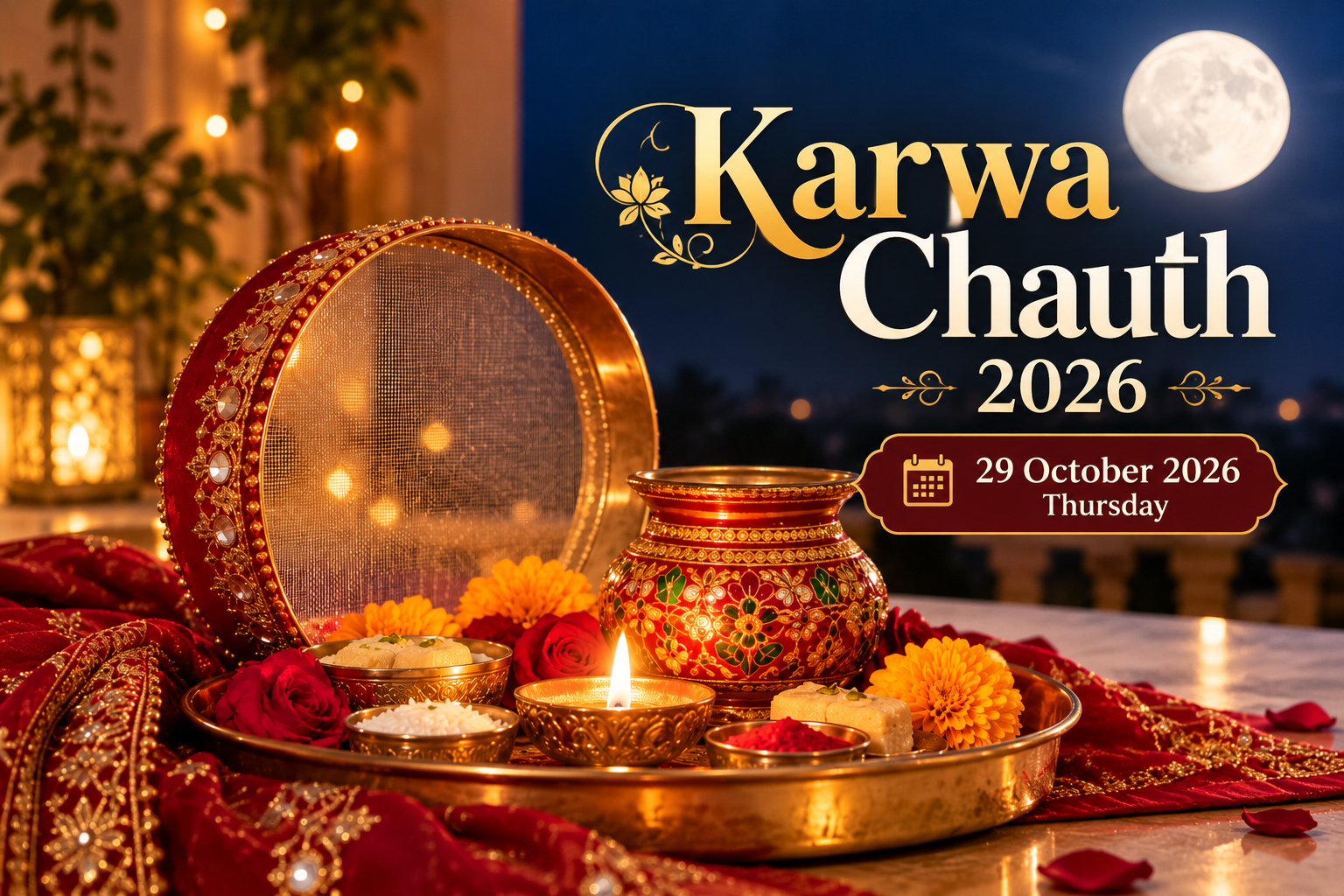
Karwa Chauth 2026: Date, Significance, Puja Vidhi and Traditions
Karwa Chauth 2026 Date: Thursday, 29 October 2026
Karwa Chauth is a traditional Hindu festival celebrated with devotion, love and faith, particularly in North India. Married women traditionally observe the Karwa Chauth Vrat for the well-being and long life of their husbands. The festival is also an occasion to celebrate companionship, mutual respect and the emotional bond between partners.
Whether you are observing Karwa Chauth for the first time or following a long-standing family tradition, understanding its significance and rituals can make the occasion more meaningful.
Why Is Karwa Chauth Celebrated?
Karwa Chauth falls on Krishna Paksha Chaturthi during the Hindu month of Kartik according to the Purnimanta calendar followed in much of North India.
Traditionally, married women observe a day-long fast and offer prayers for their husbands' longevity, happiness and prosperity. Goddess Parvati, Lord Shiva, Lord Ganesha and Karwa Mata are associated with the festival.
Beyond fasting and rituals, Karwa Chauth represents dedication, gratitude and the importance of nurturing relationships through understanding and care.
What Is Sargi in Karwa Chauth?
Sargi is a traditional pre-dawn meal usually prepared or gifted by the mother-in-law to her daughter-in-law before the Karwa Chauth fast begins.
It commonly includes fruits, dry fruits, sweets and other foods according to family customs.
Sargi symbolises affection, blessings and the special bond shared within a family. However, the traditions and foods associated with Sargi may differ across communities.
Karwa Chauth Puja Vidhi: How Is the Festival Celebrated?
Karwa Chauth rituals vary according to regional and family traditions. A commonly followed method includes:
-
Sargi Before Sunrise: Women begin the day with Sargi according to their family customs.
-
Puja Preparations: A traditional puja thali is prepared with a diya, roli, rice, sweets, water and a karwa.
-
Prayers and Worship: Devotees offer prayers to Goddess Parvati, Lord Shiva, Lord Ganesha and Karwa Mata.
-
Karwa Chauth Vrat Katha: Women gather to listen to or recite the traditional fasting story.
-
Moon Worship: After moonrise, the Moon is traditionally worshipped and Arghya is offered.
-
Completing the Fast: The fast is concluded according to family customs, often with the husband's participation.
The purpose of these rituals is to express devotion, gratitude and prayers for marital well-being.
Common Karwa Chauth Myths and Misconceptions
Myth 1: An expensive puja arrangement makes the fast more meaningful.
The significance of Karwa Chauth lies in devotion and intention, not in the cost of clothes, jewellery or puja decorations.
Myth 2: Every family must follow exactly the same rituals.
Karwa Chauth traditions differ across regions and communities. Respecting your family's established customs is more meaningful than comparing celebrations.
Myth 3: Not observing a strict fast brings bad luck to a marriage.
There is no reason to create fear or guilt around personal health decisions. Relationships grow through trust, respect, communication and care, not through fear of consequences.
Frequently Asked Questions About Karwa Chauth
1. Can unmarried women observe Karwa Chauth?
Some unmarried women observe Karwa Chauth according to their personal beliefs or family traditions. Practices vary between communities.
2. Is it compulsory to observe a waterless fast?
A Nirjala fast is traditionally followed in many families, but fasting practices vary. Individuals with medical conditions, those who are pregnant or breastfeeding, or anyone taking medication should seek medical advice before fasting. Health should always remain a priority.
3. What happens if the Moon is not visible on Karwa Chauth?
Cloudy weather may prevent direct visibility of the Moon. Families generally follow their established traditions and may refer to local moonrise information for guidance.
4. Can Karwa Chauth be celebrated without fasting?
People who cannot fast may still choose to participate through prayers, family traditions and expressions of love and gratitude.
5. Is Sargi necessary for everyone?
Sargi is an important tradition in many North Indian families, but it is not followed in exactly the same way everywhere.
6. Can husbands observe Karwa Chauth too?
Some husbands choose to fast alongside their wives as a personal expression of companionship and mutual commitment.
A Thought for Karwa Chauth
Karwa Chauth is not about proving how much you love someone through the difficulty of a fast. It is an opportunity to appreciate the relationship you share.
Traditions become more meaningful when they bring families closer, encourage gratitude and strengthen mutual respect.
Celebrate Karwa Chauth with faith, positivity and understanding — because a strong relationship is nurtured through care every day, not just on one festival.
By Astrologer Manisha Koushik
For more festival insights, astrology guidance and practical spiritual perspectives, visit www.askmanisha.com.
