Tulsi Vivah 2026: Puja Vidhi & Significance | तुलसी विवाह 2026: पूजा विधि एवं महत्व
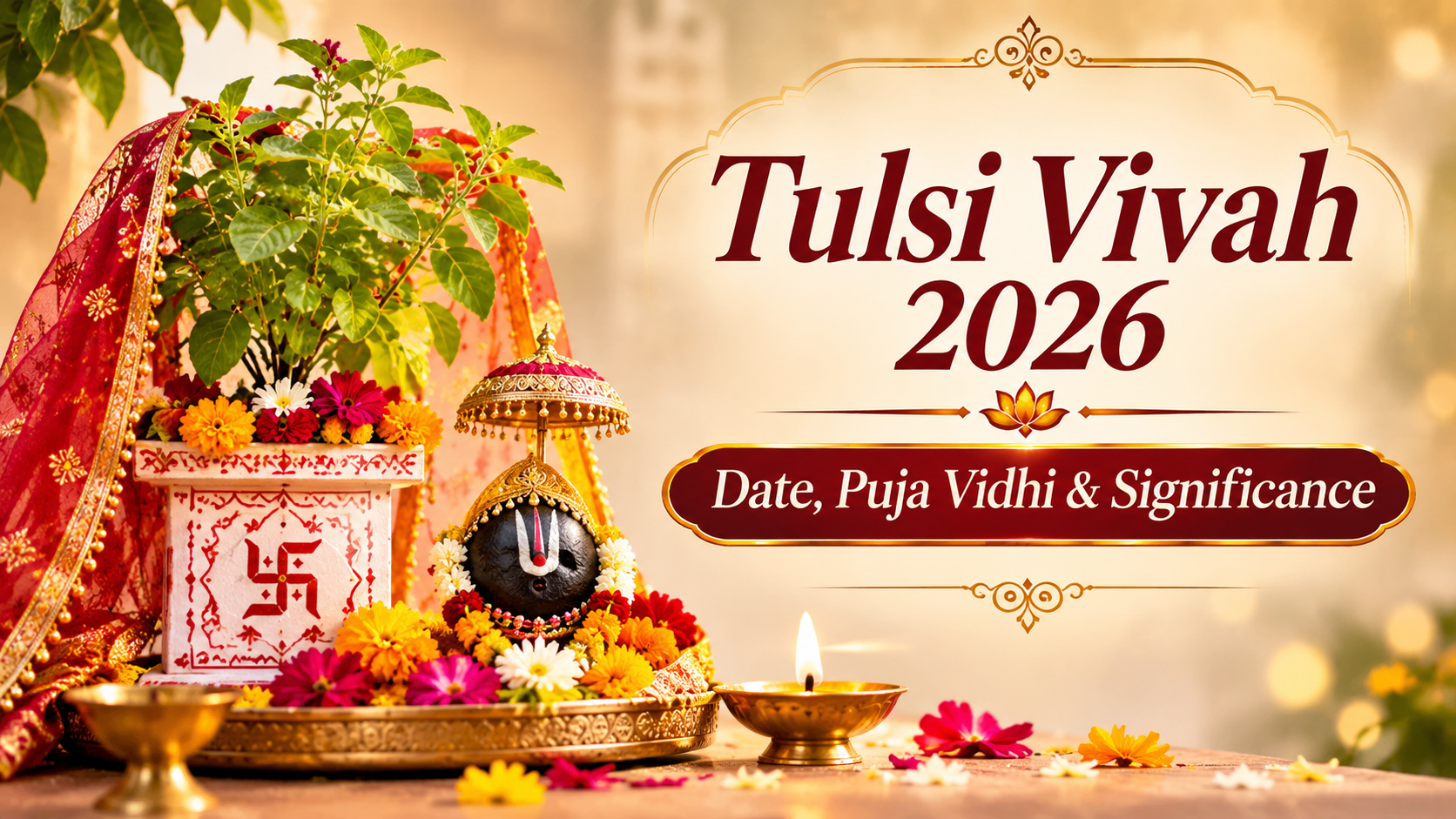
Tulsi Vivah 2026: Date, Puja Vidhi & Significance | तुलसी विवाह 2026: तिथि, पूजा विधि और महत्व
By Astrologer Manisha Koushik
Tulsi Vivah is a cherished Hindu tradition celebrating the ceremonial marriage of the sacred Tulsi plant and Lord Vishnu in his Shaligram form. Observed during the auspicious period of Kartik Shukla Paksha, this festival brings together devotion, family traditions and the symbolism of a sacred marriage.
Homes are decorated, the Tulsi plant is adorned like a bride, and families perform a traditional wedding ceremony with prayers, offerings and aarti.
Tulsi Vivah is also closely associated with Dev Uthani Ekadashi and the traditional reopening of the Hindu wedding season in many communities.
But what is the story behind this unusual wedding? Why is Tulsi considered sacred, and how can families perform Tulsi Vivah at home?
Here is a guide to the festival's traditions, significance and rituals.
Tulsi Vivah 2026: Date and Shubh Muhurat
Tulsi Vivah is traditionally observed during Kartik Shukla Paksha, commonly on Dev Uthani Ekadashi or Dwadashi, depending on regional and family customs.
Festival Year: 2026
Month: Kartik
Traditional Observance: Shukla Paksha Ekadashi or Dwadashi
Puja Muhurat: Follow the local Panchang and the observance followed by your family.
Because the date and auspicious timings depend on the applicable Panchang and local tradition, devotees should confirm the appropriate day and Muhurat for their city before arranging the ceremony.
तुलसी विवाह 2026: तिथि और शुभ मुहूर्त
तुलसी विवाह भगवान विष्णु के शालिग्राम स्वरूप और माता तुलसी के विवाह का पावन उत्सव है।
यह पर्व कार्तिक मास के शुक्ल पक्ष में मनाया जाता है। कई परिवार देवउठनी एकादशी के दिन तुलसी विवाह करते हैं, जबकि कुछ परंपराओं में द्वादशी तिथि को विशेष महत्व दिया जाता है।
पर्व: तुलसी विवाह 2026
मास: कार्तिक
तिथि: शुक्ल पक्ष की एकादशी या द्वादशी, पारिवारिक परंपरा के अनुसार
शुभ मुहूर्त: अपने शहर के स्थानीय पंचांग के अनुसार
इस दिन घरों में तुलसी के पौधे को सजाया जाता है और भगवान शालिग्राम के साथ पारंपरिक विवाह की रस्में निभाई जाती हैं।
What Is Tulsi Vivah?
Tulsi Vivah is a symbolic Hindu wedding ceremony in which the sacred Tulsi plant is ceremonially married to Lord Vishnu, usually represented by Shaligram.
The ritual is performed with many of the customs associated with a traditional Hindu wedding.
Families decorate the Tulsi plant, arrange a ceremonial setting, offer flowers and sweets, and perform prayers and aarti.
In some households, family members take on the ceremonial roles of the bride's and groom's families.
The festival reflects the importance of devotion, sacred relationships and continuity of family traditions.
The Story Behind Tulsi Vivah
One of the best-known religious narratives associated with Tulsi Vivah is the story of Vrinda, also known in devotional traditions as Tulsi.
According to a popular version of the legend, Vrinda was a deeply devoted woman married to Jalandhar.
Her unwavering devotion and spiritual strength played an important role in the events surrounding Jalandhar's conflict with the gods.
The story describes Lord Vishnu intervening through an act of deception, leading to the breaking of Vrinda's vow and ultimately to Jalandhar's defeat.
When Vrinda discovered what had happened, she expressed her anguish and cursed Lord Vishnu.
Different versions of the narrative describe the subsequent events in different ways, but a widely followed tradition connects Vrinda with the sacred Tulsi plant and Lord Vishnu with Shaligram.
Their ceremonial marriage is remembered through Tulsi Vivah.
These accounts belong to Hindu religious literature and oral traditions, and details vary across communities.
Why Is Tulsi Vivah Celebrated?
Tulsi Vivah carries several layers of religious and cultural significance.
1. Devotion to Lord Vishnu
The festival honours Lord Vishnu and the sacred Tulsi plant, both of which hold an important place in Vaishnava worship.
2. The Beginning of the Traditional Wedding Season
In many Hindu communities, auspicious marriage ceremonies are traditionally resumed after Dev Uthani Ekadashi, following the period associated with Chaturmas.
3. Family Participation
Tulsi Vivah is often celebrated as a family occasion, with several generations participating in the preparations and rituals.
4. Respect for Sacred Traditions
The festival reflects the role of plants, nature and household worship in Hindu religious life.
Tulsi Vivah Puja Vidhi: How to Perform the Ceremony at Home
Tulsi Vivah can be celebrated at home according to family and regional customs.
Step 1: Prepare the Puja Area
Clean the area around the Tulsi plant and arrange a suitable space for the ceremony.
The Tulsi plant may be placed in a decorated pot or Tulsi Vrindavan.
Step 2: Decorate the Tulsi Plant
Traditionally, the Tulsi plant is adorned with flowers, a chunri and other decorative items.
Some families also use sugarcane stalks to create a ceremonial mandap.
Step 3: Arrange the Shaligram
Place the Shaligram or the form of Lord Vishnu traditionally worshipped in your household near the Tulsi plant.
Step 4: Prepare the Offerings
Arrange flowers, fruits, sweets, a diya, kumkum, rice grains and other items used in your family's Puja tradition.
Step 5: Perform the Wedding Ritual
Offer prayers to Lord Vishnu and Tulsi Mata.
Perform the customary wedding rituals followed in your household. These may include exchanging garlands, offering a chunri and reciting traditional prayers.
Step 6: Perform Aarti
Conclude the ceremony with aarti and prayers for family harmony and well-being.
Step 7: Distribute Prasad
Offer prasad to family members and guests.
The ceremony need not be elaborate. Families can observe Tulsi Vivah with simple arrangements and sincere devotion.
तुलसी विवाह की सरल पूजा विधि
घर में तुलसी विवाह करने के लिए सबसे पहले पूजा स्थान को साफ करें और तुलसी के पौधे को फूलों तथा चुनरी से सजाएँ।
इसके बाद भगवान शालिग्राम को तुलसी के पास स्थापित करें।
पूजा की थाली में फूल, रोली, अक्षत, दीपक, फल और मिठाई रखें।
परिवार की परंपरा के अनुसार तुलसी माता और भगवान शालिग्राम का विवाह संपन्न करें।
अंत में आरती करें और प्रसाद वितरित करें।
पूजा में दिखावे से अधिक श्रद्धा और परिवार की परंपराओं का महत्व है।
Why Is Tulsi Considered Sacred?
Tulsi holds a special place in Hindu religious traditions, particularly in the worship of Lord Vishnu.
Tulsi leaves are commonly offered during Vishnu Puja, and the plant is traditionally maintained in courtyards and household prayer spaces.
Its significance is both devotional and cultural.
Although Tulsi is also known for its use in traditional herbal practices, religious beliefs about the plant should not be confused with proven medical benefits.
The spiritual importance of Tulsi Vivah lies primarily in its place within Hindu worship and family tradition.
The Connection Between Tulsi Vivah and Dev Uthani Ekadashi
Dev Uthani Ekadashi is associated with the symbolic awakening of Lord Vishnu from Yoga Nidra.
In many Hindu traditions, this occasion marks the conclusion of the Chaturmas period, during which certain auspicious ceremonies, including weddings, are traditionally avoided.
Tulsi Vivah is closely connected with this transition.
For many families, it symbolically marks the return of the traditional marriage season.
However, the exact observance and timing may vary according to regional customs.
Common Traditions Associated With Tulsi Vivah
Families celebrate Tulsi Vivah in different ways.
Some arrange a small wedding ceremony with relatives and neighbours.
Others perform a simple Puja at home.
Traditional devotional songs, wedding rituals, offerings and festive meals may form part of the celebration.
There is no need to compare the scale of one family's celebration with another.
The significance of Tulsi Vivah lies in the intention behind the worship and the preservation of meaningful traditions.
Frequently Asked Questions About Tulsi Vivah 2026
What is Tulsi Vivah?
Tulsi Vivah is the ceremonial marriage of the sacred Tulsi plant and Lord Vishnu in his Shaligram form.
When is Tulsi Vivah celebrated?
Tulsi Vivah is traditionally observed during Kartik Shukla Paksha, commonly on Dev Uthani Ekadashi or Dwadashi, depending on regional and family traditions.
Why is Tulsi married to Shaligram?
The tradition is associated with religious narratives concerning Vrinda, Lord Vishnu and Shaligram. The ceremony symbolises a sacred union within Hindu devotional traditions.
Can Tulsi Vivah be performed at home?
Yes. Many families perform Tulsi Vivah at home with a decorated Tulsi plant, Shaligram, prayers and traditional offerings.
Is a priest necessary for Tulsi Vivah?
Practices vary. Some families invite a priest to conduct the ceremony, while others follow their household traditions and perform a simple Puja themselves.
What items are needed for Tulsi Vivah?
Common items include a Tulsi plant, Shaligram, flowers, chunri, diya, kumkum, rice grains, fruits and sweets. Requirements vary according to custom.
What is the significance of Tulsi Vivah?
The festival celebrates devotion, sacred relationships and the continuity of family traditions. It is also associated with the beginning of the traditional Hindu wedding season in many communities.
A Thought for Tulsi Vivah 2026
Tulsi Vivah reminds us that meaningful celebrations do not always require grand arrangements.
A decorated Tulsi plant, a simple prayer and a family gathered together can make the occasion special.
Beyond the rituals, the festival encourages us to appreciate the traditions that connect generations and bring a sense of belonging into our homes.
May this Tulsi Vivah bring peace, harmony and happiness to every household.
तुलसी विवाह की हार्दिक शुभकामनाएँ।
Astrologer Manisha Koushik