Vastu for Basement: Best Direction, Usage, Design & Vastu Tips for Homes and Commercial Buildings
Basements have become an essential part of modern construction. Whether used for parking, storage, utility services, indoor recreation, office space, or commercial operations, basements help maximize available space and improve functionality.
Traditionally, Vastu Shastra recommends maintaining balance between open spaces and built-up areas. However, considering modern urban development and rising land costs, basements have become a practical necessity in residential as well as commercial properties.
When planned properly, a basement can serve its purpose efficiently while maintaining harmony within the overall structure of the building.
Why Is Basement Vastu Important?
A basement is located below ground level and naturally receives less sunlight and ventilation than other parts of the property.
Without proper planning, basements may become dark, damp, cluttered, or poorly ventilated. Therefore, careful attention must be given to design, usage, lighting, and airflow.
A well-designed basement feels safe, organized, and functional while supporting the overall energy balance of the property.
Best Direction for Basement According to Vastu
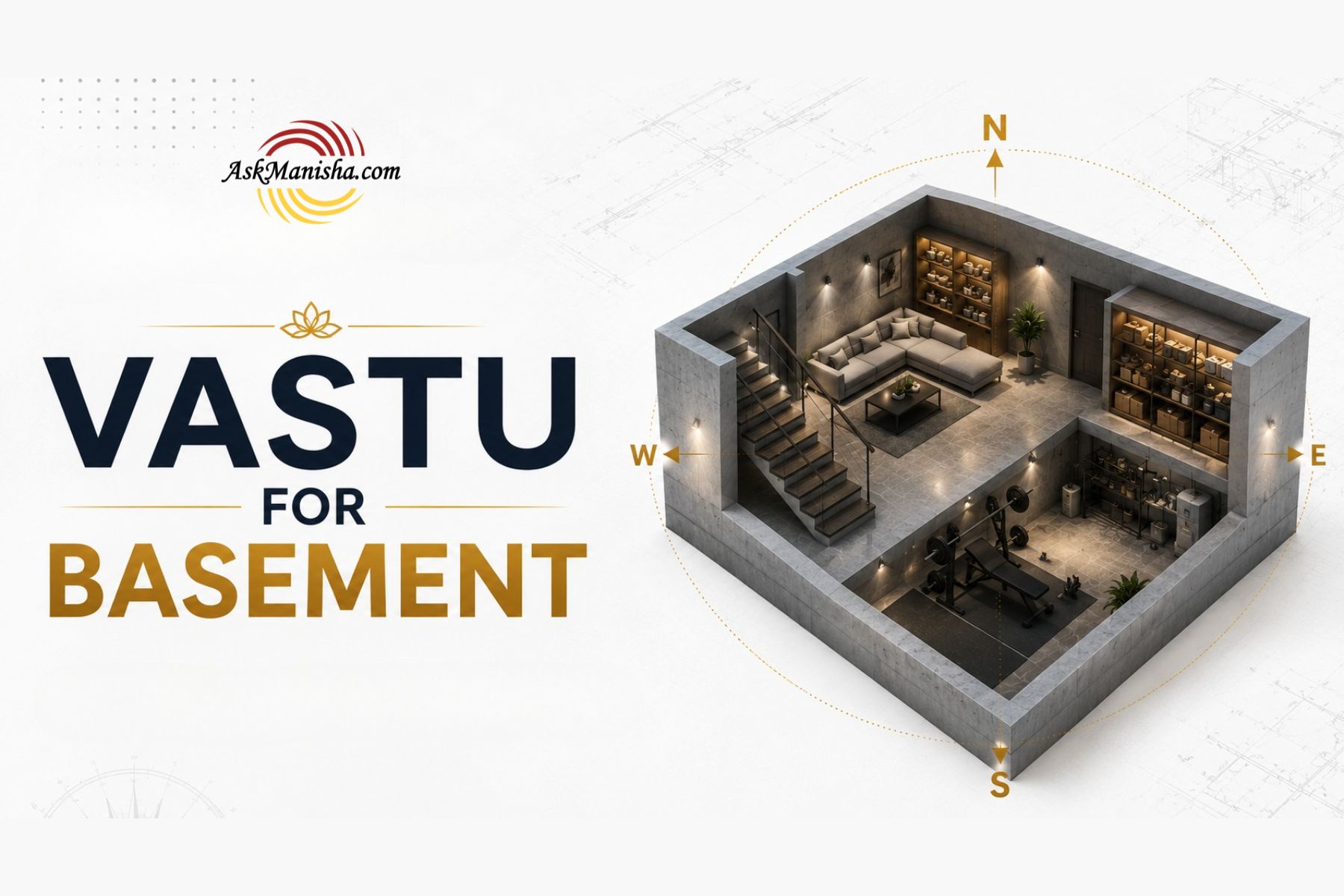
According to traditional vastu principles, the North and East directions are generally considered the most suitable locations for basements.
These directions are associated with openness, movement, and natural light.
Whenever possible, the basement should be planned so that it receives maximum ventilation and brightness from these zones.
Directions Generally Avoided
The Southwest zone is traditionally considered the heaviest part of a property.
Constructing a deep basement in this area is generally avoided whenever possible.
Proper structural planning should always be discussed with architects, engineers, and vastu experts before finalizing the design.
Basement Entrance and Staircase Placement
The entrance to the basement should be easily accessible and well-lit.
Staircases leading to the basement should be planned carefully to ensure safe movement and proper energy flow.
You can also read our detailed article on Vastu for Stairs for complete staircase planning guidance.
Ideal Height for a Basement
A basement should never feel cramped or suffocating.
Adequate ceiling height improves comfort, ventilation, and usability.
Modern basements should provide sufficient headroom and easy movement while complying with local building regulations.
Importance of Natural Light and Ventilation
One of the most important aspects of basement design is proper ventilation.
Wherever possible, provisions should be made for:
-
Natural light
-
Air circulation
-
Exhaust systems
-
Ventilation shafts
-
Mechanical airflow systems
A bright basement feels significantly more positive and functional than a dark, enclosed space.
Best Uses for a Basement
A basement can be utilized in several practical ways, including:
Residential Basements
-
Storage room
-
Home gym
-
Utility room
-
Home theatre
-
Indoor recreation area
-
Parking space
-
Hobby room
Commercial Basements
-
Parking facilities
-
Inventory storage
-
Utility services
-
Archives and records
-
Technical equipment rooms
-
Service areas
The intended use should be planned according to the overall purpose of the building.
Storage Guidelines for Basements
Many homeowners use basements primarily for storage.
While storage is practical, avoid turning the basement into a dumping area.
Regular cleaning and organization are essential.
Broken furniture, damaged electronics, unused items, and excessive clutter should be removed periodically.
You may also find our guide on Vastu for Store Room useful.
Electrical Equipment in Basements
Large electrical systems, generators, and technical installations should be positioned carefully according to building requirements and safety standards.
Adequate ventilation and maintenance access should always be provided.
Basement Colors According to Vastu
Because basements naturally receive less sunlight, lighter colors work best.
Recommended shades include:
-
White
-
Cream
-
Beige
-
Light grey
-
Soft yellow
-
Light blue
Light colors create a feeling of openness and make the area appear larger and brighter.
Dark colors can make basements feel smaller and less welcoming.
Lighting for Basements
Proper artificial lighting is essential for basement spaces.
A combination of:
-
Ceiling lighting
-
Wall lighting
-
Ambient lighting
-
Functional task lighting
helps create a comfortable and inviting atmosphere.
You can also read our detailed guide on Vastu for Lighting.
Common Basement Vastu Mistakes
Some commonly observed issues include:
-
Poor ventilation
-
Excess moisture
-
Water leakage
-
Clutter accumulation
-
Inadequate lighting
-
Improper drainage
-
Unused dead spaces
-
Poor maintenance
Addressing these issues can significantly improve the functionality and comfort of the basement.
Basement Vastu for Commercial Buildings
For commercial properties such as malls, offices, hotels, hospitals, and commercial complexes, basements are commonly used for parking, storage, utility services, and operational support.
A well-planned basement improves building efficiency and enhances the user experience for visitors and staff.
You can also explore:
-
Vastu for Commercial Complex
-
Vastu for Office
-
Vastu for Hotel & Resort
-
Vastu for Mall
-
Vastu for Hospital
for more commercial planning guidance.
Final Thoughts
Modern construction often makes basements a necessity rather than a choice. While traditional vastu principles emphasize balance and openness, practical design solutions can help create a basement that remains functional, comfortable, and efficient.
Proper direction, ventilation, lighting, storage management, and maintenance are the key factors that contribute to a successful basement design.
If you are planning a new residential or commercial project and need personalized guidance, you can consult Astrologer Manisha Koushik (AskManisha) for a detailed vastu assessment and customized recommendations.